

Everything we publish comes out of one recorded conversation a month between your executive and a former McKinsey, BCG or Bain consultant. It goes to LinkedIn first, because that is where B2B attention still concentrates. Then we watch what the market actually does with it, and we move the effort to wherever it is working.

Four years of interviews, not a content calendar.
Most firms assign a writer and a content calendar. We put a former McKinsey, BCG or Bain consultant in a recorded conversation with your executive once a month, pull out the point of view they already hold, and take it wherever their buyers are. Nothing is written from a template, because there is no template to write from.
Month one starts here. It does not end here.
LinkedIn
Posts
Published on a set cadence, in your language
LinkedIn
Ads
Amplifying the posts that already earned attention
LinkedIn
Newsletter
For the audience that subscribed to you directly
Substack
Issue
The long version, on ground you own
Tweets
The same point of view, cut for a faster feed
Articles
Where a subject earns the room
One interview with a former McKinsey, BCG or Bain consultant. Recorded, then mined.
Illustrative of a typical first month. Every engagement is scoped to the executive, and the mix changes as the data comes in.
That mix is a starting allocation, not a package. Every month we look at which pillars actually reached your buyers, and we rebalance. Most firms cannot do this, because what they sold you was a fixed number of posts.
Reallocation happens at the quarterly data review, not on a whim, and never without showing you the numbers that prompted it.
Not sure which channels your category actually rewards?
Request a consultationWe publish on X for a reason that has almost nothing to do with X's audience. It is one of the sources large language models draw on. When someone asks an AI who the credible voices are in your category, we want your executive's point of view to be part of that answer, attributed to them by name.
The same logic drives the Substack issue and the long-form articles. Feed posts disappear. Indexed, attributable, long-form writing is what gets retrieved and quoted back months later. Most firms in this space are still optimizing for a feed that a machine now reads on your buyer's behalf.
Anyone can publish. Engagements run six months because that is how long one full cycle of publish, measure and change actually takes.
Most clients renew, because the second cycle starts from evidence the first one produced.
Every engagement comes with a live dashboard. It is not a monthly PDF and it is not a screenshot of LinkedIn analytics. It is the same view we work from.
Figures from one live client account over 90 days. Every engagement is different.
01
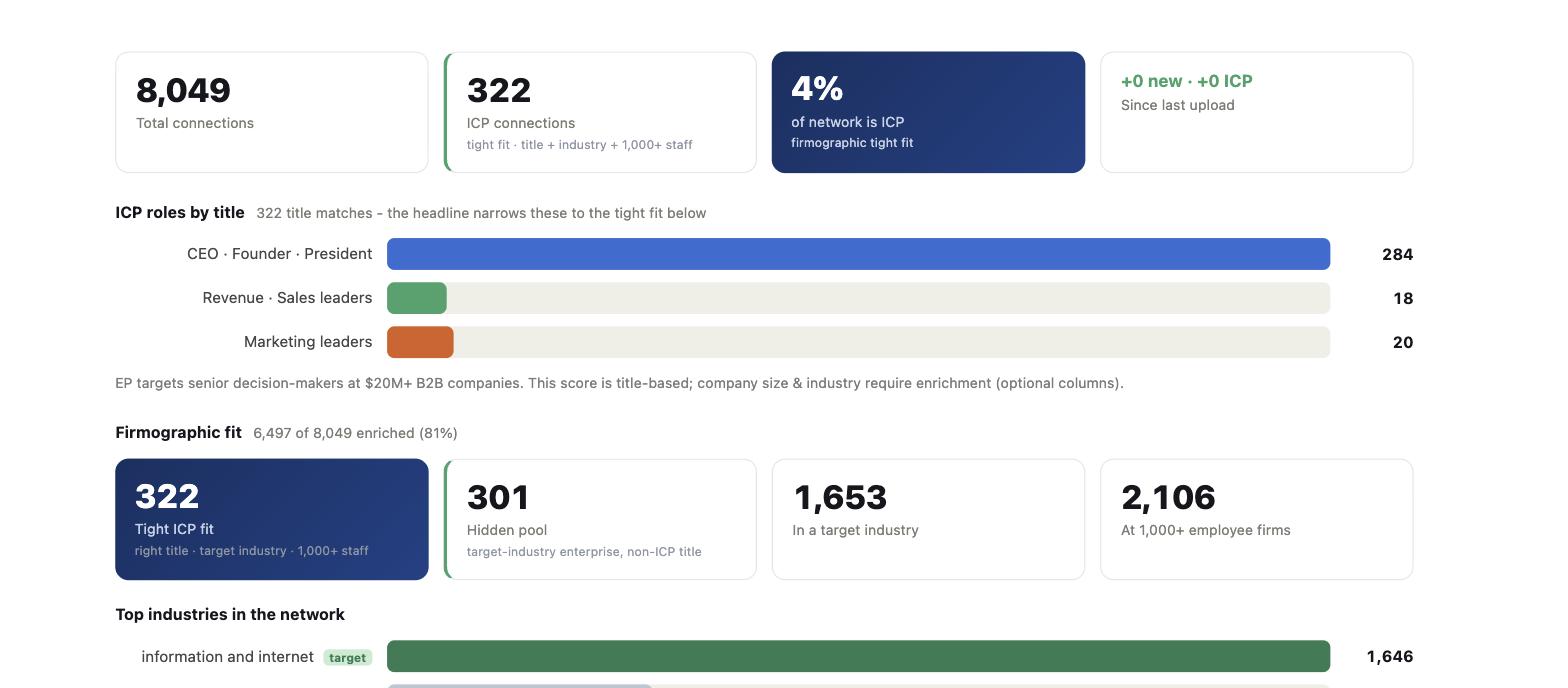
We take your connections and score them on title, industry and company size. You find out how many of the people you are already connected to are actual buyers, and how many of those you have never put anything in front of.
02
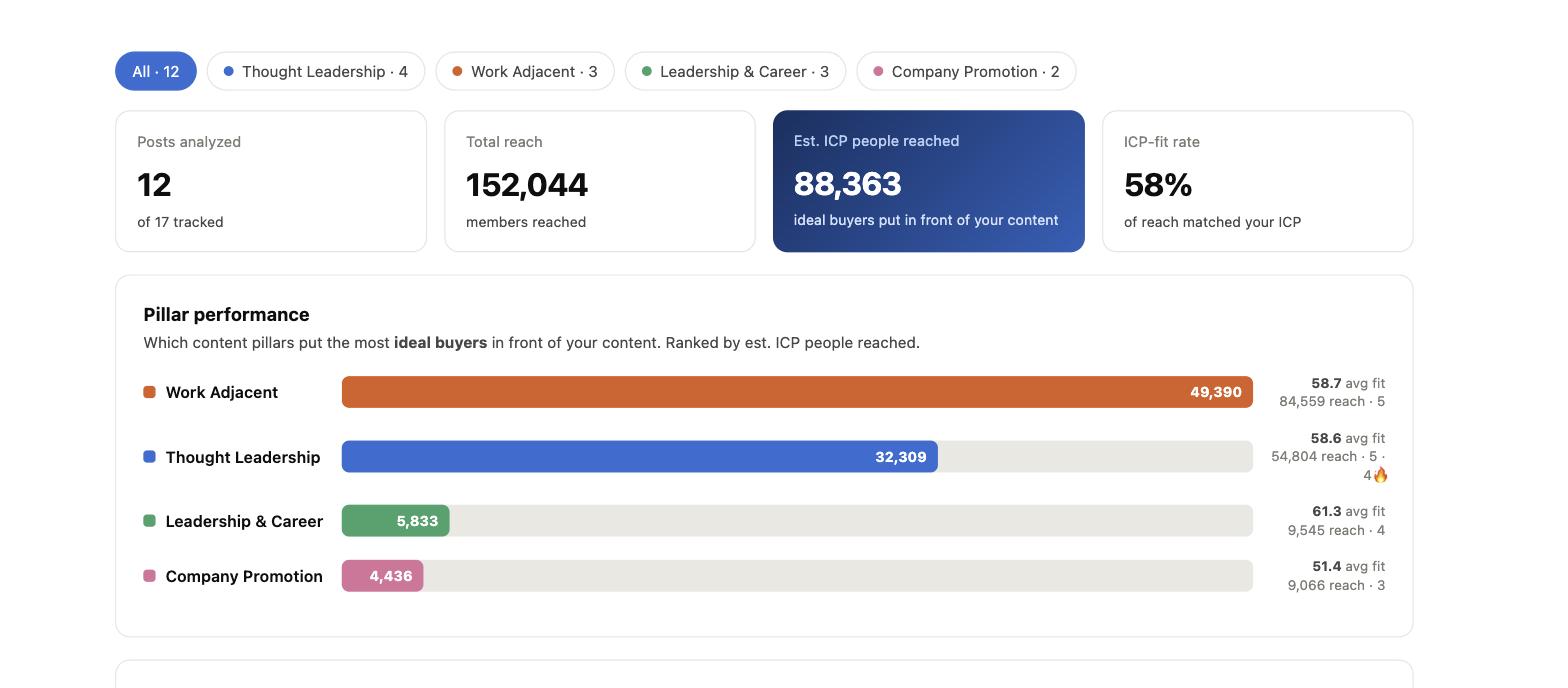
Every pillar is ranked by estimated ideal buyers reached. The post with the most likes is often not the post that reached the most buyers. That is the difference that decides what we make more of next quarter.
03
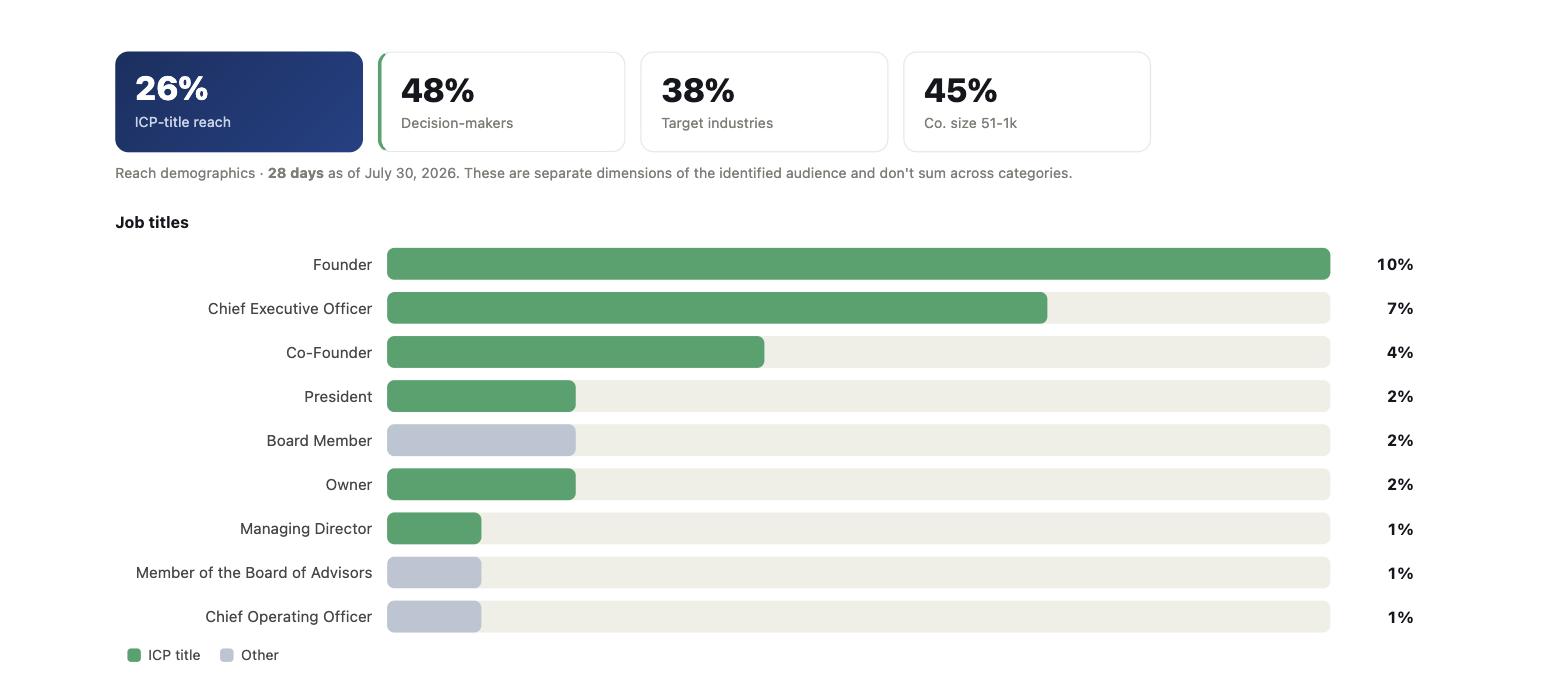
Reach broken down by job title, seniority, industry and company size, so you can see the share of your audience that is decision-makers rather than a follower count that flatters everyone.
04
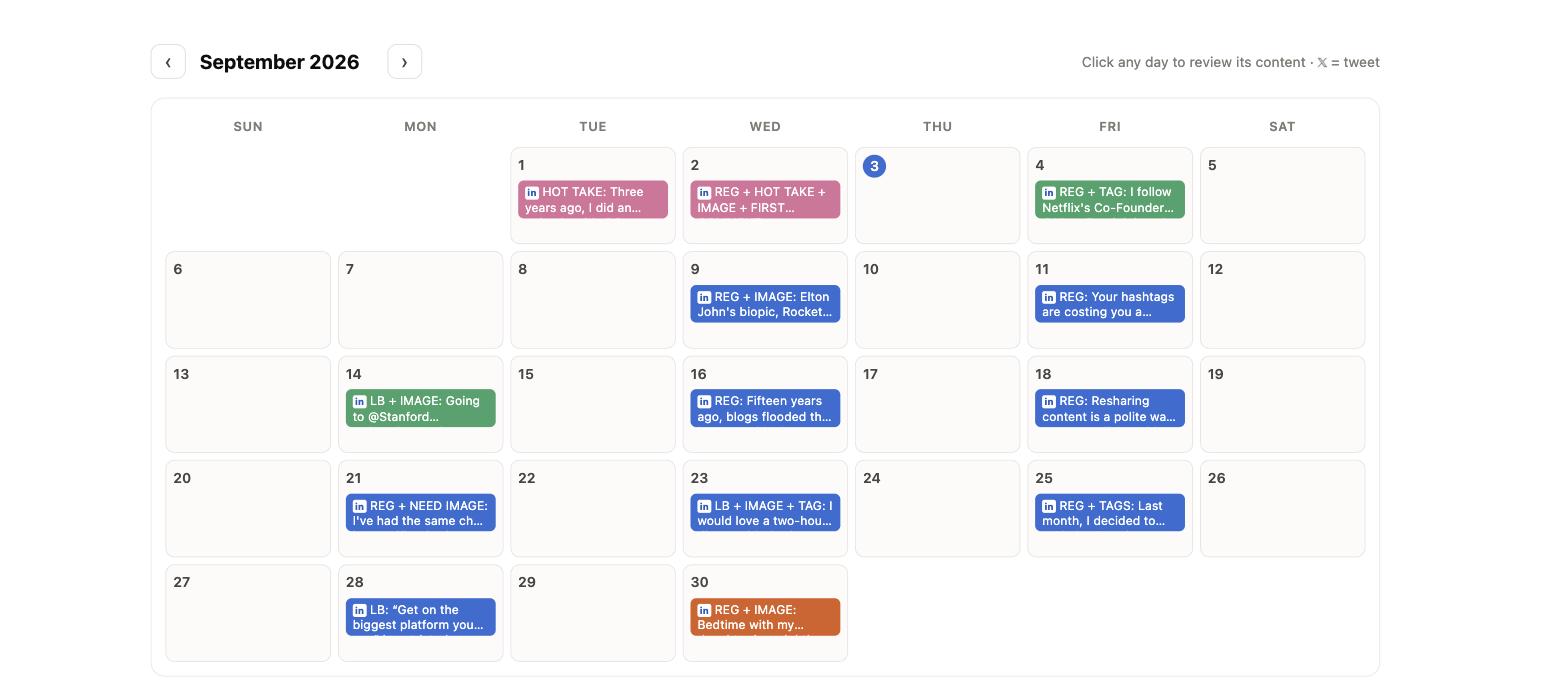
Everything scheduled, color-coded by pillar, with approval in the same place. You are never wondering what is going out under your name on Thursday.
If we cannot show you that the right people are reading, we have not done the job. That is the standard, and the dashboard is how you hold us to it.
Curious what your dashboard would show in month one?
Request a consultationAlmost every engagement is signed by the company rather than the executive, and that is the right call. The fastest and most efficient way to build credibility for an organization is through the people who lead it. The company gets that executive's network, their experience and their point of view working in public: on awareness, on business development, on hiring and retention, and on the run-up to an exit.
Roughly a third of what we publish is leadership and career journey rather than company content. That is deliberate. It is the part that earns the attention the company then benefits from.
If you need to make this case to a CEO or a CFO, we build the deck and join the call.
Almost always one person first, so the approach proves itself and earns the trust before anyone commits further. Then the same playbook runs across the leadership team.
A CEO, a CRO and a CTO saying compatible things is worth more than three unrelated feeds. Each of them keeps their own voice, each brings a different network, and all of them point at the same market position.
Multi-executive engagements are priced differently. Ask on the call.
We do not run anonymous case studies. Every result below belongs to someone who agreed to have their name on it.
See where you stand against the executives already winning your category.
Request a consultationVisibility does different work in different markets. What earns a healthcare board's attention is not what moves a search mandate.
Tell us where to reach you. We will look at your presence against the executives already winning in your category.
Request a consultation